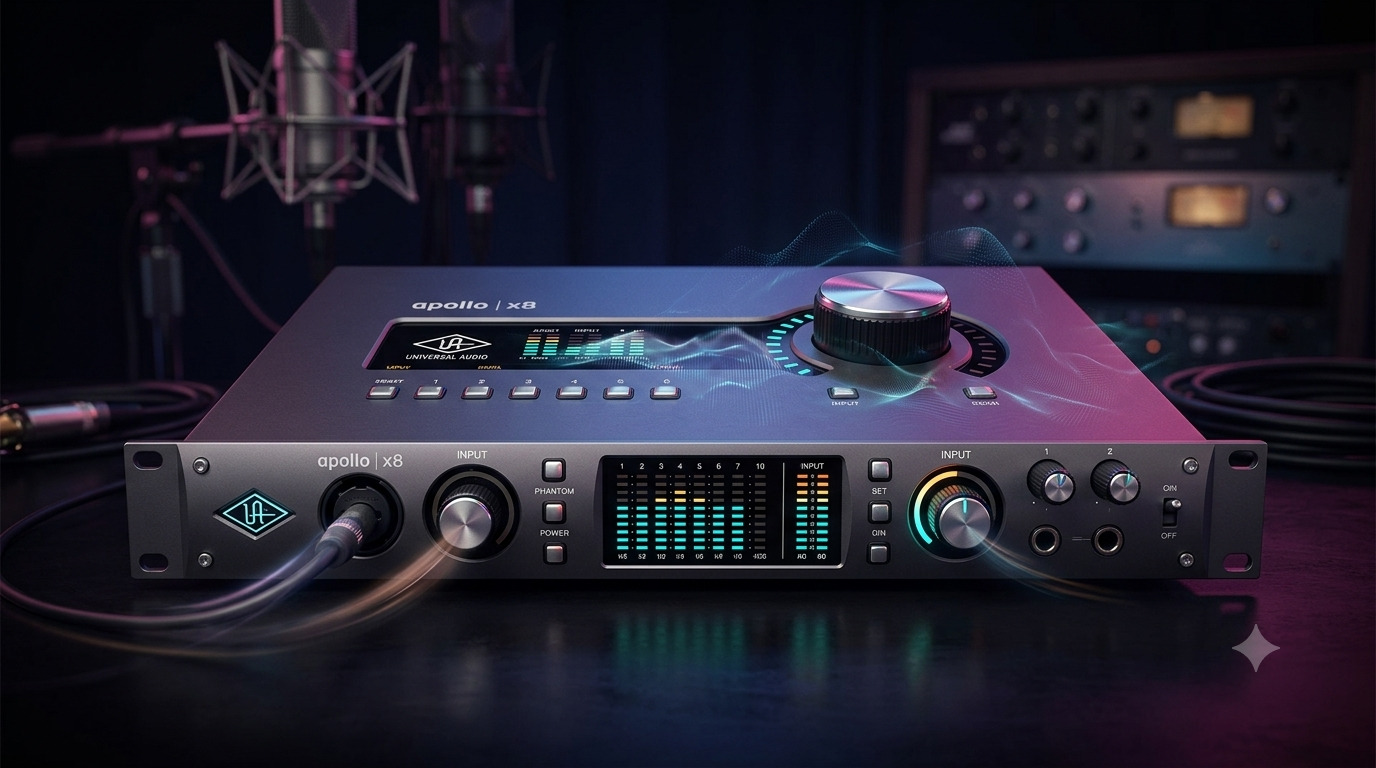
The Zero-Jitter Blueprint: Understanding Audio Interfaces
Computers do not speak music; they speak numbers. Your audio interface is the vital translator that bridges the gap between the physical vibrations of your room and the binary digital world inside your computer.
The core of every audio interface revolves around two critical components:
- ADC (Analog-to-Digital Converter): Takes the electrical voltage coming from your microphone and turns it into a stream of 1s and 0s for your DAW.
- DAC (Digital-to-Analog Converter): Takes the numbers from your DAW and turns them back into electrical voltage to move your studio monitors.
The Pillars of Digital Audio: Sample Rate and Bit Depth
When your interface captures sound, it doesn’t take a continuous recording; it takes millions of tiny digital snapshots per second.
- Sample Rate: Dictates how many times per second a snapshot is taken. The standard studio baseline is 44.1 kHz (44,100 snapshots per second) or 48 kHz, which perfectly covers the entire range of human hearing.
- Bit Depth: Dictates the dynamic accuracy of each snapshot. Recording at 24-bit gives your audio an incredible amount of dynamic range, ensuring that your quietest whispers don’t get lost in digital noise and your loudest peaks don’t clip.
Latency and the Danger of Jitter
If you have ever tried to record a vocal and heard your voice delayed in your headphones half a second later, you have experienced latency. This delay happens because the computer takes time to process the buffer sizes of the digital audio.
Even worse is a hidden phenomenon called jitter. Digital audio relies on an internal clock inside the interface that tells the converters exactly when to take a snapshot. If this clock is cheap or unstable, the snapshots are taken at slightly uneven intervals. This microscopic timing error is called jitter, and it degrades your stereo imaging, thins out your low-end, and adds a subtle harshness to your music. Investing in a quality interface with a rock-solid internal clock is the only way to achieve true digital transparency.