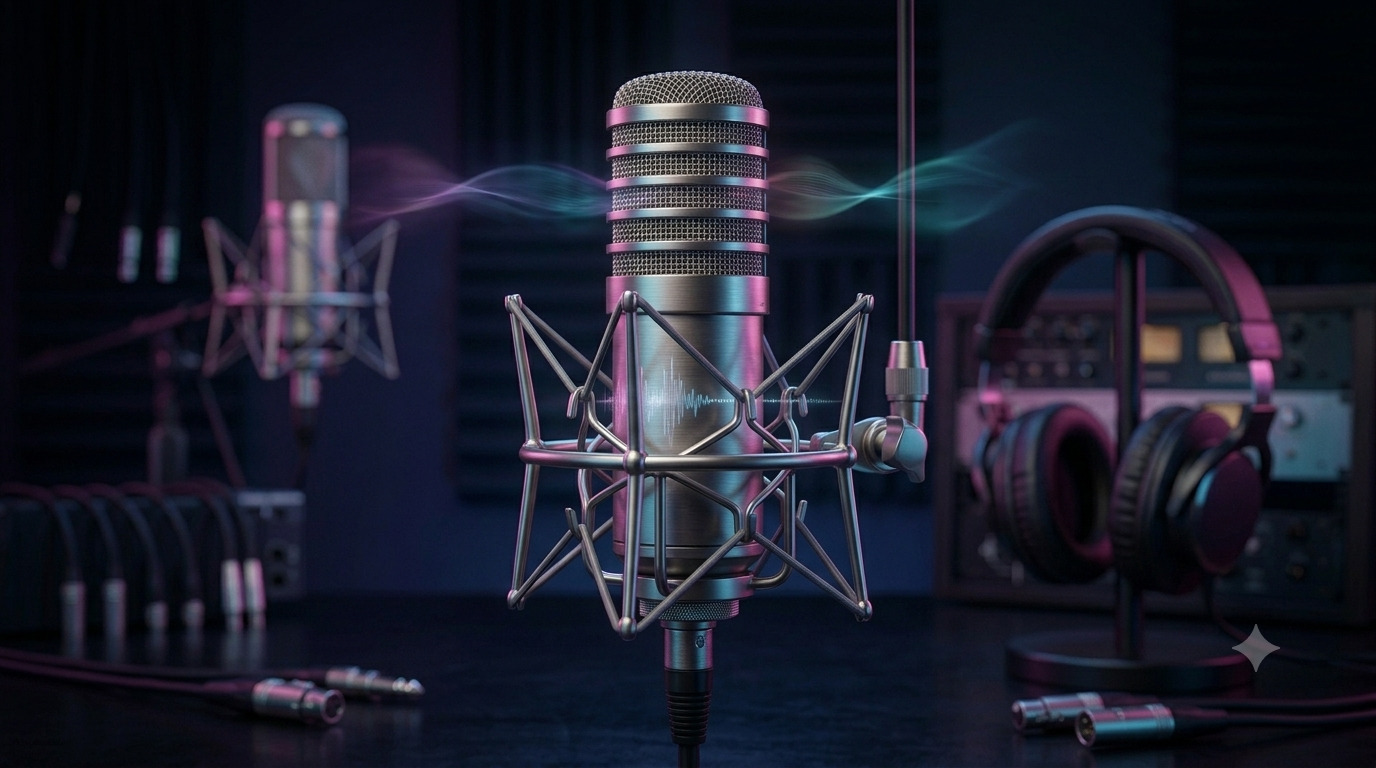
Capsules & Character: Finding the Right Microphone for Your Sound
A microphone is essentially the inverse of a speaker. Instead of turning electrical signals into physical vibrations, it captures the physical vibrations of the air and translates them into electricity. But not all microphones listen to the world the same way. Choosing the wrong type of mic can completely ruin the vibe of a performance.
The two main workhorses of any modern recording studio are dynamic and condenser microphones.
The Heavyweight: Dynamic Microphones
Dynamic mics (like the legendary Shure SM7B or SM58) are built like tanks. They use a physical coil attached to a diaphragm inside a magnetic field. Because this mechanism is relatively heavy, it takes a lot of acoustic energy to move it.
- Best for: Loud sources like aggressive rap vocals, rock vocals, brass instruments, and guitar amplifiers.
- The upside: They easily handle extreme sound pressure levels without distorting, and they naturally ignore background room noise.
The Microscope: Condenser Microphones
Condenser mics use an ultra-thin, highly sensitive capsule that requires +48V Phantom Power from your interface to charge its internal electronics. Because the capsule is incredibly lightweight, it reacts to the tiniest movements in the air.
- Best for: Detailed studio vocals, acoustic guitars, drum overheads, and delicate voiceover work.
- The upside: They capture incredible high-end detail, nuance, breath, and spatial atmosphere.
Watch Out for the Proximity Effect
No matter which mic you choose, you need to manage the proximity effect. The closer a performer gets to a directional microphone, the more the low-end frequencies get artificially boosted. Get too close, and a vocal will sound boomy, muddy, and unnatural; stand too far back, and it will sound thin and distant. Finding the sweet spot is key.